Whitewashing The Past: Or How The Race Grievance Industry ‘Gammonises’ History For Its Own Ends

First of all, take a good look at this picture:
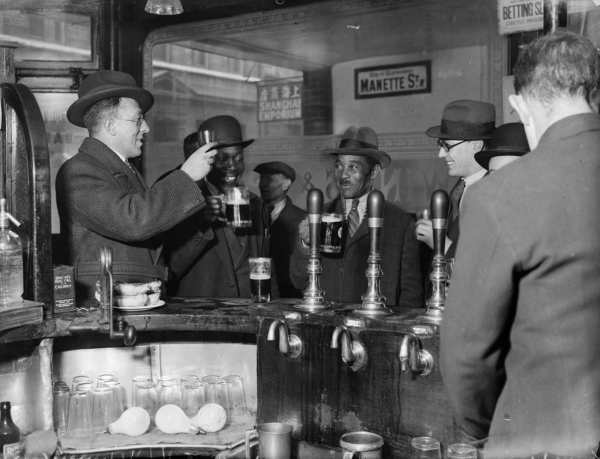
This was taken at the Pillars Of Hercules pub in Greek Street, Soho in the days before it became popular with hipster scum.
The date was 1933 – fifteen years before black emigration to the UK supposedly ‘started’.
You may also notice the sign for the Shanghai Emporium just through the window: run by Yu-Chang Chu and Frances Cheng. Long before going for a Chinese after boozing became part of the British culture, getting your stomach lined at the Shanghai before a session at the Hercules was part of life for Soho residents of a literary bent in pre-war London.
But probably what you’ve noticed most of all is a group of black and white gentlemen laughing and conversing together – how they must spin in their graves at how future generations obsessed with race have squandered their community camaderie of old for suspicion and hate!
Just off Manette Street, the part of London which was once a hotbed of organised anarchism (there’s an oxymoron for you), Greek Street became part of the growth areas for Oriental cuisine in London in the days Soho was still considered to be the bohemian part of London more resembling Alice’s Wonderland than the sleezy taint it suffered for a while later.
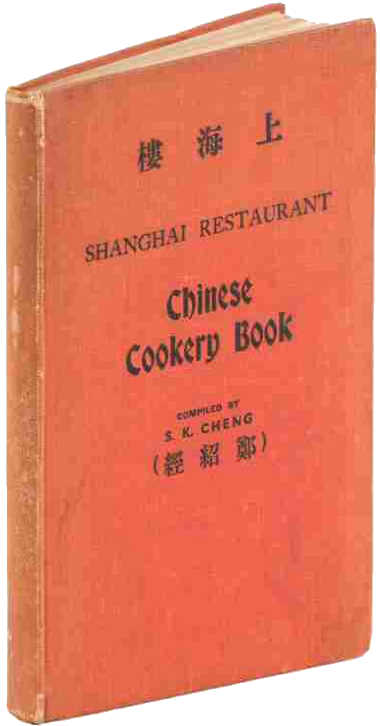
The Shanghai Emporium became popular and famous enough for it to release its own cookbook in 1936 – The Shanghai Restaurant Chinese Cookery Book – filled with adaptations of its recipes so people could try them for themselves at home, long before the plague of celebrity chefs we know today.
Copies today will skin you for £200 – if you’re lucky, but some older reference libraries have copies tucked away still, so if interested have a look when they all reopen, and have a smile at references to ‘primary soup’ – what today we would know simply as diluted chicken stock, and a base for some of the recipes contained within.
The story of the Shanghai’s experience with white western customers was an interesting one that predated the way many of us have meals today. Initially they tried offering their fare in the standard western full course manner: appetiser (usually something of fruit to cleanse the pallet) starter, main course, afters, and so forth; but customers found it too much to take, or it simply didn’t feel right (and, ironically considering the later stereotype, too heavy to eat!), so adapted a more free for all style which meant people could order meals as they pleased.
Sadly, the Shanghai was sold by the family before the war for a different type of business – accountancy – yet it was one of a number of ‘ethnic’ businesses in London (mainly in the Limehouse district, before it was wiped out in the Bliz) at that time which thrived, but which have been systematically forgotten about as if they’d never happened, that somehow Britain was the land of eggs, chips, bacon and lard before Windrush.
Forget the fact that China and India have turned Britain into the world’s biggest nation of ‘tea wops’ (as our American cousins call us).
It really should not be surprising that in truth we were always far more amiable to other cuisines and cultures than today’s historical revisionists would have you believe. Even the worst empires in history find some of that under their control rubs off on them (eg. the Romans with the Greeks) – and with the British Empire being largely a trading empire than that of military and cultural subjugation (despite the best efforts of missionaries), the influence was perhaps greater on the British than with other empiric nations.
Moreover, with many people in even the lowest sections of society spending some time abroad due to work or being part of the armed services (much of which was in the supply and support of troops, not merely soldiering), it was inevitable there would be a constant drip feed of positive experience returning to permeate our own.
Even when admitting Britain has had people from all races, creeds and colours since it began, still the Race Grievance Industry cannot help itself looking for racism in much the manner witchfinder generals accused anyone and everyone to keep themselves in work, and for any non-white journalist, playing the race card has become the easy, cheesy, sleezy way to put a bit of emotivism into their work for extra views, and not caring one jot about the poison it injects into the zeitgeist.
For example:
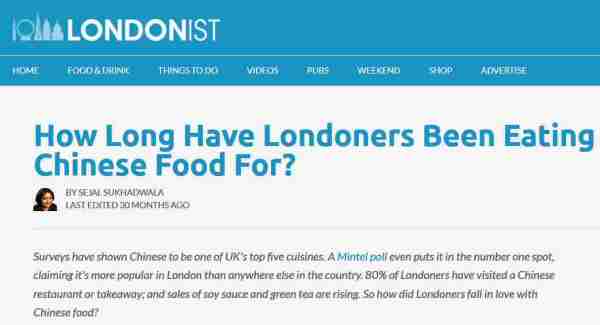
In an article for the Londonlist, journalist

But the first tabloid newspaper was London’s Westminster Gazette, which only started in 1901.
Ergo, how could ‘The tabloids had a field day mocking the food …’ when it would be another sixteen years before the first tabloid newspaper?
The nearest to a ‘tabloid’ at that time was the Pall Mall Gazette run by the iconoclaust W. T. Stead, which later merged with the Evening Standard. The Pall Mall Gazette was the first ‘investigative journalism’ newspaper, but as its writers included George Bernard Shaw, Oscar Wilde, Robert Louis Stevenson and even Friedrich Engels, it would be stretching a definition beyond credulity to call it ‘tabloid’.
(Incidentally, a tabloid newspaper back in 1901 simply meant a newspaper which reprinted articles from other newspapers in a concise format: it would be another sixty years before the ‘shock! horror! scandal!’ red tops and black top tabloids we know today would appear).
This sort of truth twisting is of course part of a constant narrative from liberal humanist snobs that the Great British lumpen proletariat are happy go lucky sorts of people who don’t mind unrestricted mass immigration one bit – no no no, it’s only when evil newspapers owned by evil capitalists poison their minds with lies they turn nasty.
Who did Ms Don’t Let Facts Get In The Way Of A Good Emotive Bleat Of Racism used to write for?

But you’d already guessed that much.


 AA42
AA42 AA6x7
AA6x7 The Mare's Nest
 6s & 7s
 Skeletal Screams Blogspot
 Jazz-Hands