His Dark Materials Finally Delivers (Six Episodes And A Lost Will To Live Later)
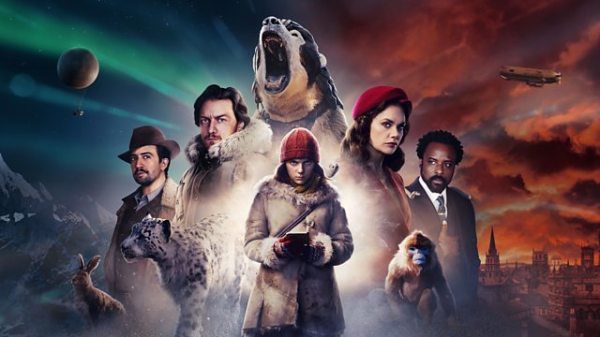
What happens when some bright spark at Auntie Beeb says ‘We need something that’s Game Of Thrones, Harry Potter and Doctor Who rolled into one, safe enough for CBBC viewers but not naff enough to make them turn off.’
Some bright spark went, ‘what about His Dark Materials?’, and hoped no one remembered The Golden Compass being one of tinseltown’s biggest turkeys.
But Auntie Beeb, remembering all that money they flushed down the look last year on Watership Down (or Watered It Down as it was dubbed), remembered they needed something big and epic to restore its reputation and bank balance, especially now that Doctor Who’s a bust flush with all the money it brought into the corporation to pay certain celebs their over inflated wages.
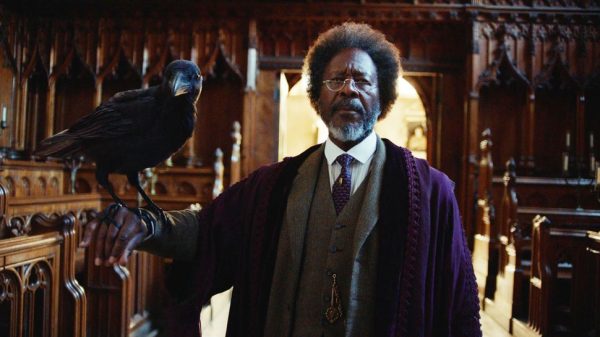
‘Students, will return to their house domitories – ah shit, wrong book!’
It’s harder to remember a show which has been so roundly crucified, yet enjoys such massive rating figures. Overall it commands a staggering ten million viewers – once you add in those watching it by streaming platforms instead of TV. For a show on a Sunday night which can’t make up its mind whether it’s aimed at kids or adults, this is impressive.
In all likelyhood, it’s aimed as the sizeable kidult population usually found hanging around nerd interest shops except those selling soap. They’ve always been rank rotten when it comes to giving shows their due, having more attitude than gratitude towards anything, which – by the very definition of giving them something to moan about incessently to the point of other people’s attempted suicide – has therefore some intrinsic value.
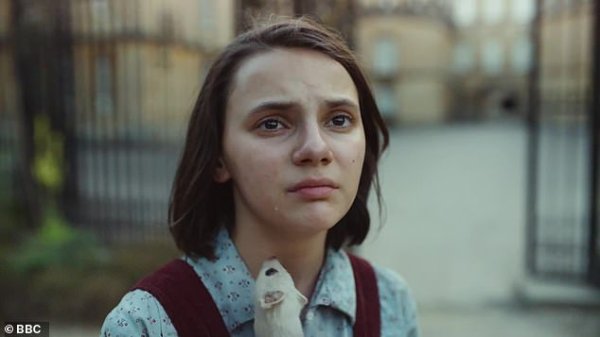
‘Boo hoo hoo, why does nobody love us, Pantalaimon?’
‘Because the plot’s slower than the airship, Lyra – anyway, everyone loves me because I’m cute, so ha-ha!’
The main complaints are to those unfamiliar with the series how long it takes for the story to get from A to B – like most fantasy series they tend to be as prog rock in length as the Yes songs the author has on shuffle in the background when writing them.
Whole episodes come and go where minor points of character and plot development are strung out, to the point the process feels more like the repeat attempts to blow out half sneezed out strings of mucus during a bad cold – there’s more the sense of relief than satisfaction at each denouement.
To others, there’s the predicable – if ironic – complaints about too much being trimmed in the pursuit of being concise to fit to fifty minutes – plus one and a half minutes explaining what happened the week before and two and two third minutes explaining what’s going to happen next week.
Some are valid – the part where Lyra discovered her uncle and the research lady are really her gadfly lord dad and his discarded fucktoy mum whose idea of parenting was dumping her at Oxford University for strangers to bring up – this being a world where bastard children cramps ones respective career styles awfully so. Wham, bam and thank you ma’am moment in anyone’s book, or TV show of the book.
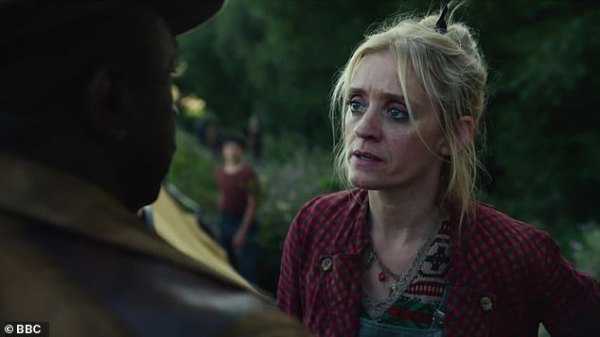
‘What d’ya mean I kaunt act? Cor blimey, stone the crows and haw’s ye fawver!’
‘Because you’re the only Londoner who sounds like Dick Van Dyke in ‘Mary Poppins’ pretending to be one!’
Yet all delivered with the drama of wet suet by Lara’s old nurse Ma Costa. Heaven forbid anyone suggest Anne Marie Duff got the part because she’s the ex-wife of James McAvoy, who plays the renegade Lord Asriel, someone handling material way above her soap opera and day time chewing gum TV bit part level (and a repetition of what happened in last year’s turkey version of ‘Watership Down’).
It jars with Dafne Keen’s ultra bratty Lyra – a sadly common theme in the show, where the adult cast are not always up to their roles. Mat Fraser – Luvvieland’s favourite token thalidomide – had the important role of Raymond Van Gerritt delivering one of the most important crossroads lines in the show, where they have to decide whether to go north and rescue their children, and whether to allow the hunted Lyra to stay with them and bring extra unwanted attention to their plans. As with the BBC’s other big brand show of the season – ‘The War Of The Worlds’ – a slavish devotion to tokenism and inclusivity has resulted in employing non-raters, never mind third raters.
From a sense of resignation viewers have perservered with the show they’ve cursed under their breath going to sleep for a month of ended weekends. The BBC has ‘Game Of Thrones’ to thank for installing in today’s viewers a patience to endure weeks after tortuous weeks of plot plodding (and padding) for bigger final returns.
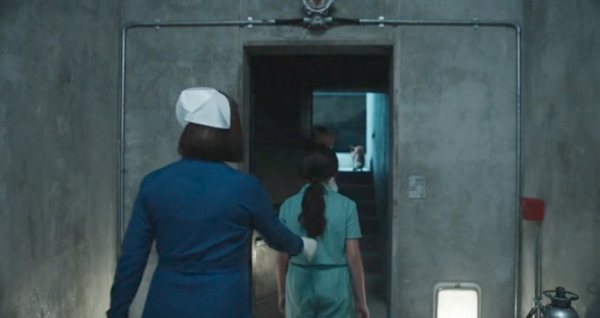
Finally, it has paid off. It’s taken five episodes, but at long last, the pay off begins at episode six – inside Bolvangar, a research institute with all the dystopian trappings of a concentration camp, but one exclusively for children.
Three minutes in to a scene where the kidnapped children are having their meagre lunch, a metal door slams open, ‘BRIDGET – MCGINN!’ is barked, and the too-late switch in tone to nicey-nicey paediatrician tones fools no one. The child looks terrified, the ‘don’t make a fuss … quick quick.’ betraying this doctor and this nurse do not bode well, everyone in the room knows they don’t bode well, and still like those sent to their deaths in the gas chambers no-one does anything because if its someone else’s turn today, they get to live one day more.
Watching as the increasingly terrified Bridget walks to what we already know from the previous episode will be painful, harrowing, leaving them a husk condemned to a a slow and lingering death, is one of the most uncomfortable one and a half moments of TV you’ll watch this year, far beyond that when the door clangs shut.
It’s the knowledge build laboriously from previous episodes this has been going on for decades which makes this episode so brilliant in its horrificness – the concept of a country where those in charge organise the kidnapping of its own children by deniable assets of self-employed gangs, but only enough as required, not enough to cause mass consternation (until they kidnap one water gypsy child – or Gyptians as they’re called here – too many); to be taken north for horrific experimentation designed to find a way of preventing them committing ‘sin’ upon the change to their daemons at puberty
Lia Williams softly spoken Dr Cooper’s ‘It’s only pain we are causing … we are doing what is necessary,’ has to be the most chilling line on TV this year. Those who know what they’re doing is infinitely more twisted and evil than the ‘sin’ they hope to eradicate, but blot out the screams and terror of their victims with gin after a hard day’s mutilating and that favourite toast to justify the unjustifiable – ‘For The Greater Good.’
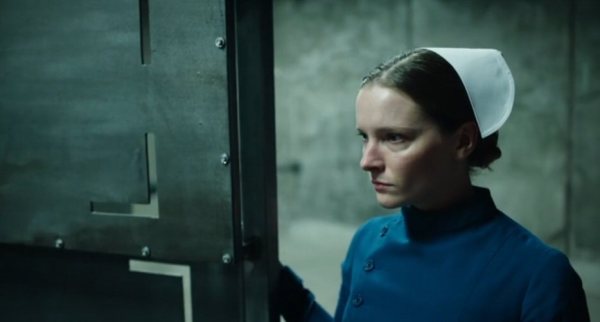
It makes for a ghastly prelude to later when Lyra – in full knowledge of the facts – is sent the same way, struggling and screaming, crying out for mercy from a mother she despises because the help of anyone or anything is better than the fate the callous medics and scientists of the research facility of Bolvangar have in store for her – the only time the psychotic nurse Clara (played brilliantly by Morfydd Clark) flinches – an evil that Lyra knows her estranged duck faced mother is in charge of choreographing.
The brilliance is that all this psychological horror, all this ghastliness, are preludes themselves to bigger moments, as the full evil of Bolvangar undergoes its own well deserved ragnarøkkr. The only pity is the quick end for those whose deaths deserved to be the long drawn out, protracted, messy affairs they gave to those whose lives had barely began.


 AA42
AA42 AA6x7
AA6x7 The Mare's Nest
 6s & 7s
 Skeletal Screams Blogspot
